Canada's Birds: An Overview of National Status

Bald Eagle populations have rebounded
following controls on pesticides.
(photo: Charles Francis)
This report summarizes the status of Canada’s bird populations, both nationally and individually, for each of eight major regions of the country (see the chapter “Measuring the State of Canada’s Birds” for details on methods). The results point to the strong influences of human activity on birds, both positive and negative. This report also identifies threats to birds and offers solutions to keep common birds common and restore threatened species.
Canadian bird populations have changed.
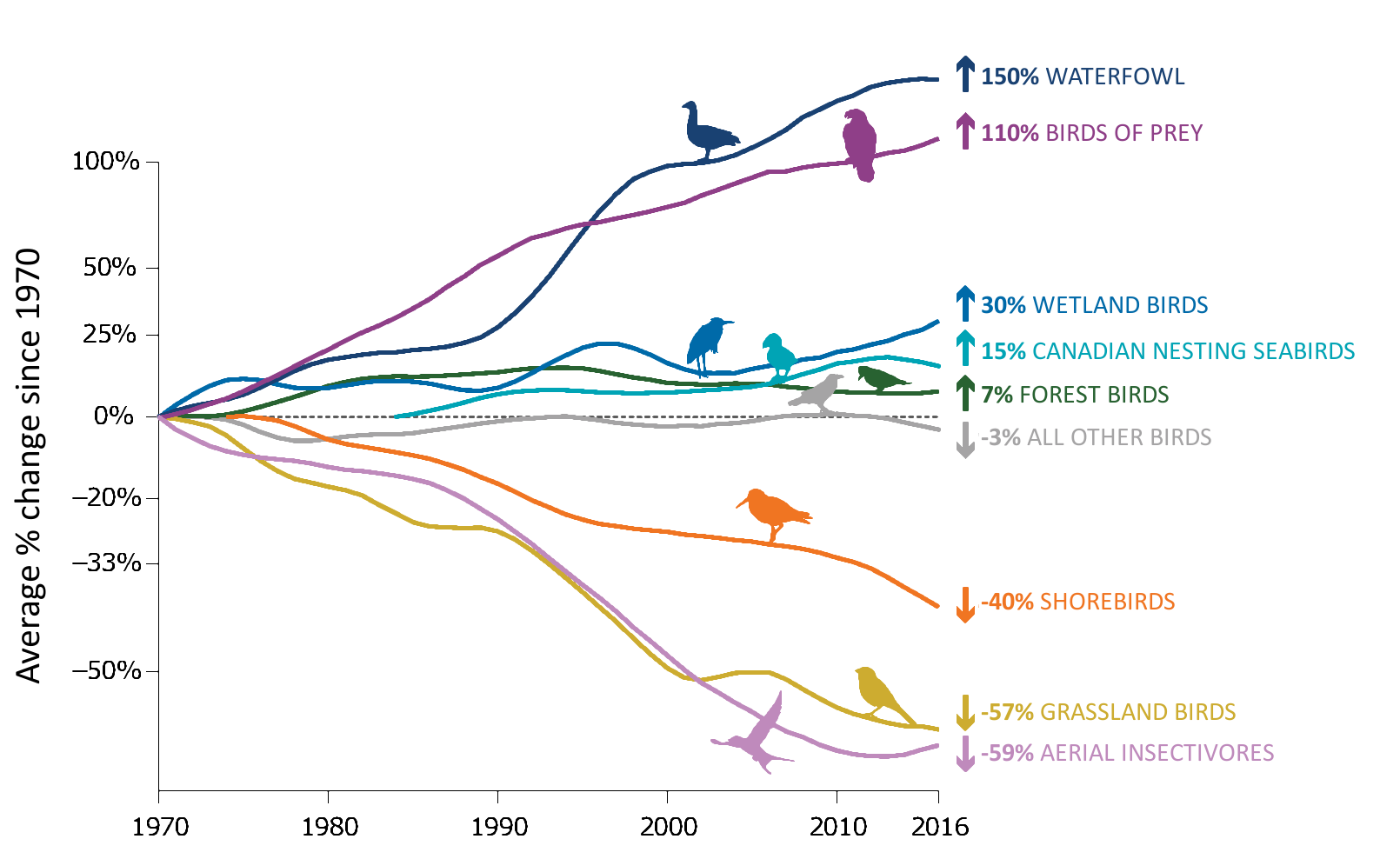
On average, Canadian breeding bird populations have decreased 12% since 1970 when effective monitoring began for most species. For species with sufficient data to monitor their status, 44% have decreased, 33% have increased and 23% have shown little overall change. Some groups, such as grassland birds, aerial insectivores and shorebirds, are showing major declines. Other groups such as waterfowl, raptors and colonial seabirds are increasing, due to careful management, changes in habitat and reductions in environmental contaminants.
Burrowing Owls benefit from well-managed
grazing to maintain their habitat. (photo:
Geoff Holroyd)
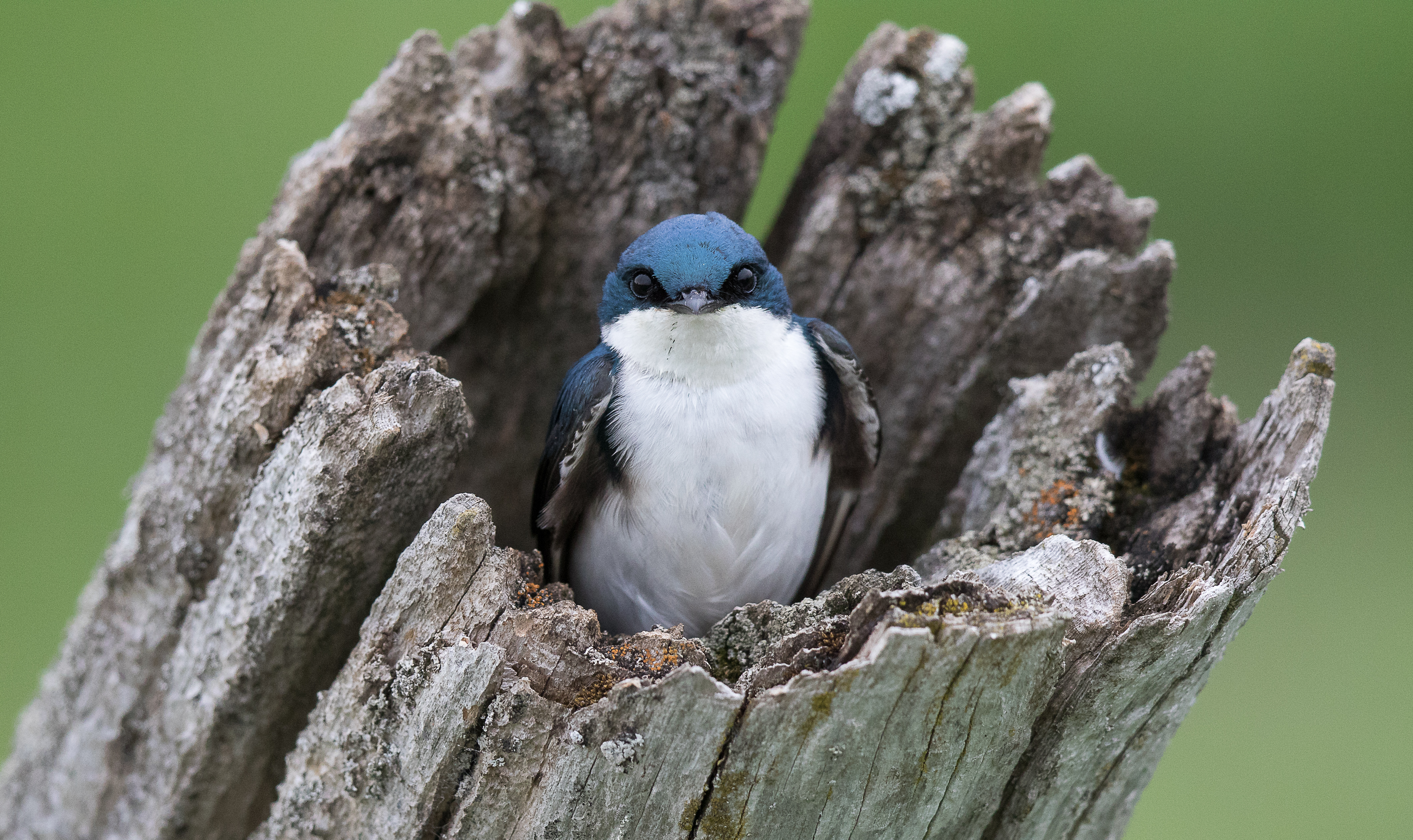
Barn Swallow and other aerial insectivore
populations have drastically declined. (photo:
Nick Saunders)
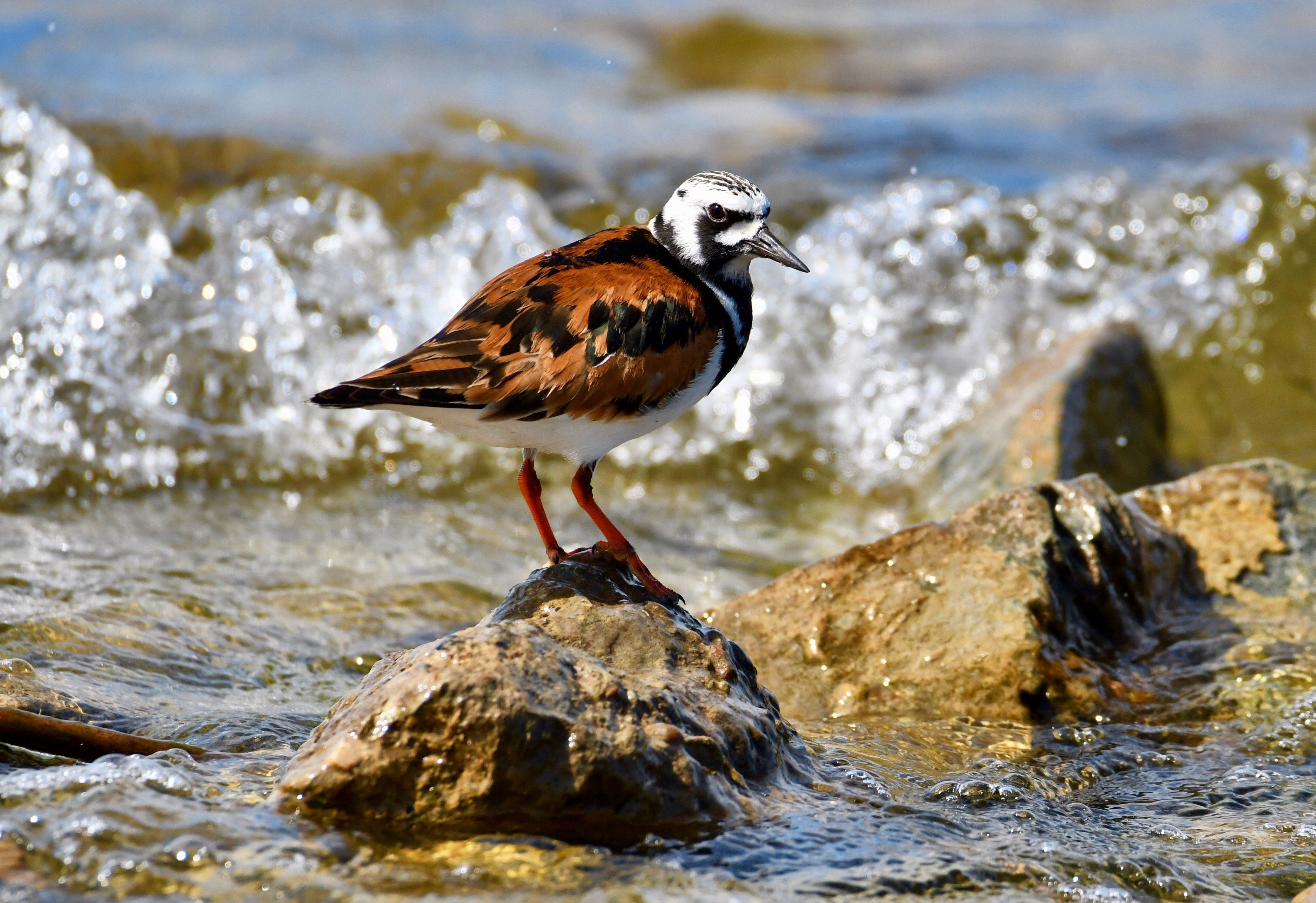
Shorebirds need urgent action. As a group, shorebird species have declined by almost half. Most shorebirds migrate very long distances and are being affected by loss and alteration of wetlands, estuaries, deltas and mudflats at all stages of their journey, from their breeding grounds in Canada to stopover sites and wintering grounds throughout the Western Hemisphere. Ongoing international cooperation is vital to identify and conserve the key sites needed by shorebirds throughout their long migrations.
Ruddy Ducks benefit from careful wetland and harvest
management. (photo: Ducks Unlimited)
Increasing raptor populations point to the success of direct intervention. Many raptor populations were hard hit by contamination in the mid-1900s. Banning persistent pesticides such as DDT, combined with species-specific recovery programs for species such as the Peregrine Falcon, have enabled dramatic recoveries since 1970. These population rebounds demonstrate that prompt action can reverse environmental damage. Ongoing vigilance and monitoring is needed to ensure that any potential impacts of new threats, such as endocrine-disrupting chemicals, are promptly identified and addressed.
Successful conservation requires committed action and international cooperation.
The biggest threats for many species during their long migrations are loss of habitat at stopover sites and on their wintering grounds. However, pollution, pesticides, hunting, collisions with human-built structures and climate change also have effects. Because most species migrate outside Canada, international cooperation is required to address these threats.
The results in this report point both to past successes in conservation and ongoing challenges for Canada’s birds.. Although there is much to be done, the successes and ongoing research to identify solutions for bird groups in trouble suggest that there are reasons to be hopeful. Solutions can, and must, be implemented at all levels of Canadian society: individuals, organizations, corporations and governments.
Canadians must work internationally to achieve conservation success and be mindful that we share “our” birds with many other countries. Only 22% of Canadian bird species spend the whole year in Canada. Most others migrate to the United States (33%), to Central America, Mexico and the Caribbean (23%) or to South America (15%). Some travel to Europe or Asia or spend long periods of time at sea (7%).