Southern Shield and Maritimes
The Southern Shield and Maritimes region is a mosaic of forest stands, wetlands, riverside meadows, rock barrens, lakes and streams, as well as the agricultural and urban centres in the Maritimes and parts of Quebec and Ontario. Most characteristic species are associated with forests and wetlands; others, including some aerial insectivores and shrub and forest-edge species, are closely tied to the open areas created by human activities, such as agriculture and forestry.
Bird's-Eye View
- Characteristic species populations have declined since 1970 due to a combination of factors acting both inside and outside this region. Changes in age and species composition of forests; loss and degradation of wetland, grassland and shrub habitats; acid rain coming from various regions; and habitat loss in southern wintering areas—all affect birds in this large and diverse region.
- Aerial insectivores have declined by 70% in this region. Causes of declines are uncertain, but may include threats on their breeding grounds, wintering grounds or during migration.
- Past forestry practices have reduced the amount of old growth forest on the landscape, leading to declines in some species. Management that more closely emulates patterns and schedules of natural disturbances, such as fire, and allows for periodic pulses in insect populations would benefit many forest dependent bird species.
- Waterfowl populations have increased, due in part to changes on their wintering grounds and to careful management of habitat and hunting in Canada and the United States.
Trends
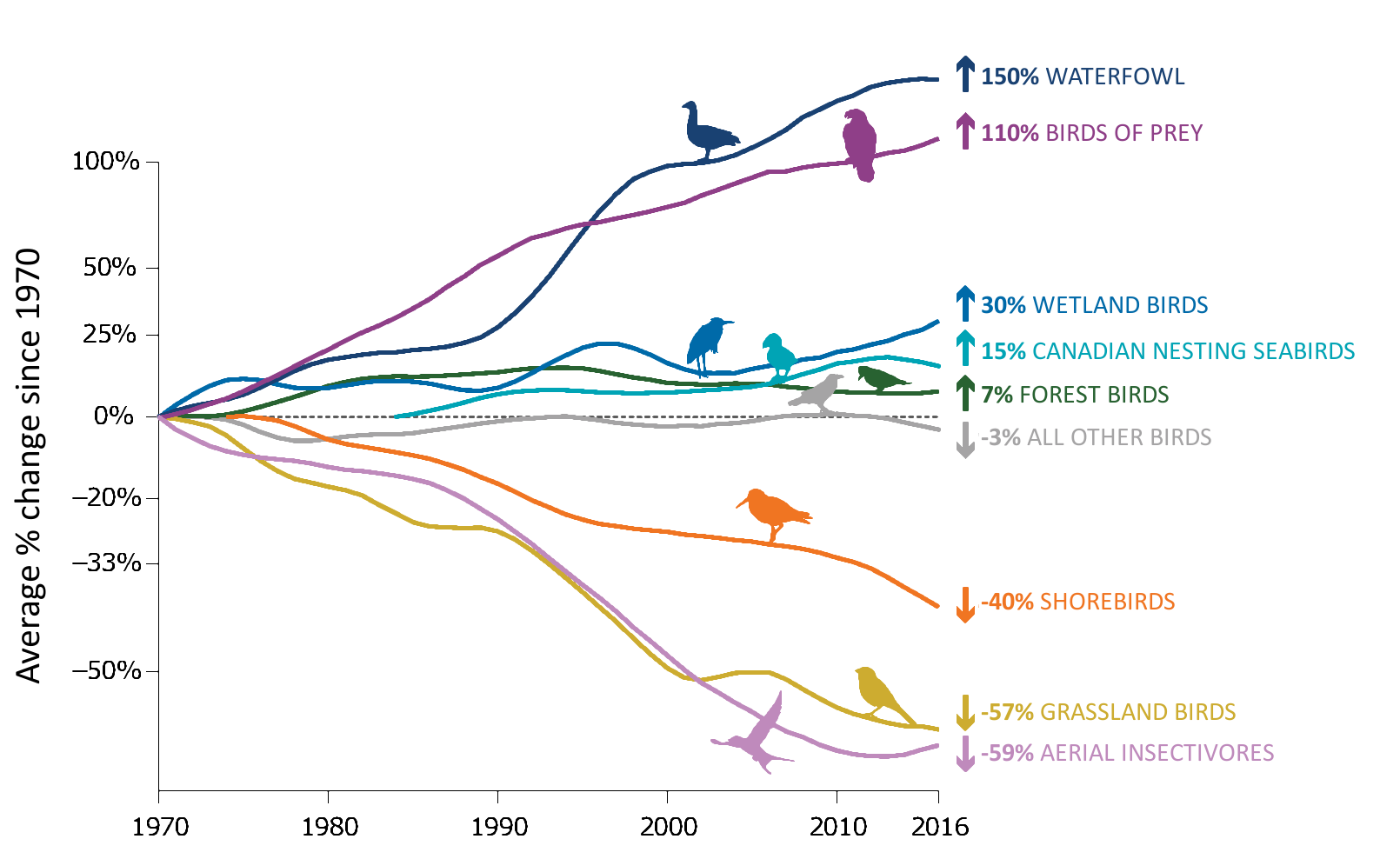
Bird populations in the Southern Shield and Maritimes have decreased by 13% on average across all species groups. One-third of the species characteristic to this region are in rapid decline.
Almost 60% of once-common birds that use shrub and forest-edge habitats have declined. This may be due to habitat loss from urban development and maturation of shrub habitats on abandoned agricultural land into forests. In some areas, heavy browsing by over abundant deer has reduced the shrub layer.
Bay-breasted Warbler populations fluctuate
dramatically in response to spruce budworm
abundance—a key food source. (photo: Alan
MacKeigan)
Waterfowl have increased as a consequence of plentiful waste-grain in agricultural areas used during winter and migration, careful management of hunting in Canada and the United States, and wetland restoration and protection to slow the rate of wetland loss.
Improved population monitoring and harvest
management for American Black Duck
populations have also improved knowledge
and management of other waterfowl species.
(photo: Mark Peck)
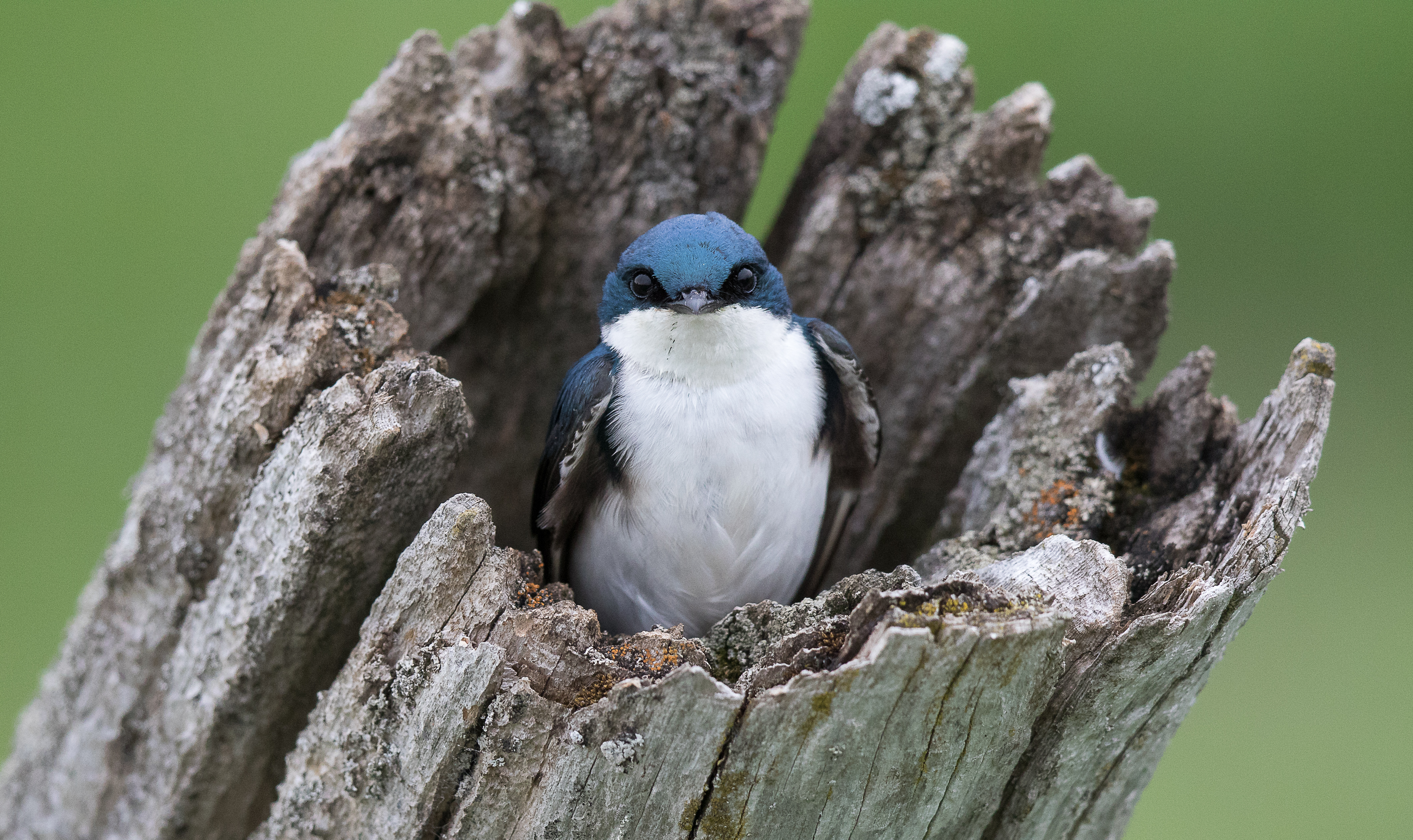
Aerial insectivores, including the Tree Swallow, Olive-sided Flycatcher and Eastern Wood-Pewee, are declining across North America and show the steepest declines in this region—by almost 70% overall. The causes of decline are still under investigation, but may be related to local habitat change, such as re-growth of forests on abandoned agricultural land where many species feed, habitat loss on their wintering grounds, or declines in insect prey due to pesticide use or pollution.
Threats
Barred Owls benefit from forestry practices
that retain mature forest. (photo: Alan
MacKeigan)
The loss and degradation of wetlands continue to threaten species that depend on these habitats. In many urban and agricultural areas, wetlands have been reduced to a small fraction of their initial area.
Common Loons are less successful at breeding in
highly acidic lakes, possibly due to reduced food for
their young. (photo: Charles M. Francis)
Many forest birds from this region winter in Central America, Mexico, and the Caribbean where forests are being converted to farmland at alarming rates. Reduced wintering habitat may be an important cause of population declines for some forest and forest-edge birds.
Solutions

The distinctive call of the well-camouflaged
Eastern Whip-poor-will was once a common
sound on summer evenings, but its population
has decreased dramatically for unknown reasons.
(photo: George Peck)
Support forest management and protection guidelines that recreate the natural age structure of the forest and improve habitat quality for many characteristic forest birds.
Work closely with countries in South and Central America and the Caribbean to support forest conservation and slow the conversion of natural forest-habitat to agricultural use.
Encourage further reductions in acidifying emissions and other contaminants from industrial activities and vehicles to reduce the effects of pollution on ecosystems.

Bicknell's Thrush (photo: Dan Busby)
Bicknell’s Thrush has been declining dramatically. Over 90% of the population winters in the Dominican Republic and Haiti where loss of habitat is a major concern and financial resources for conservation are limited. A fund has been established to encourage developers in the north-eastern United States and Canada to offset effects of development on the breeding grounds by helping to protect or restore winter habitats.